Selamat Datang | Sugeng Rawuh | Wilujeng Sumping | Selamet Dheteng | Rahajeng Rauh | Salamaik Datang | Horas | Mejuah-Juah | Nakavamo | Slamate Iyoma | Slamate Illai | Pulih Rawuh | Maimo Lubat

Friday, December 22, 2006

Resume Materi Perkuliahan Kriminalistik Pasca UTS

1. SINYALEMEN DAN IDENTIFIKASI
Sinyalemen ditemukan tahun 1879 oleh klerek di kantor polisi di Paris bernama Alphons Bertillon (sistem Bertillon) yang didasarkan atas pengukuran anggota-anggota badan manusia
Bertillon mendasarkan sistemnya dengan menggunakan ukuran-ukuran dari anggota badan tertentu yang tidak berubah.
1. Adegan badan (kuat, tegap, lampai, lemah)
2. Sikap (tegak, gagah, bongkok, kepala tunduk, kaku)
3. Langkah (tenang, lenting, panjang, pendek, cepat, lamban)
4. Kaki (panjang, pendek, lurus, bengkok, lurus)
5. Lengan (panjang, pendek, bengkok)
6. Bangun kepala (persegi empat, bulat dll)
7. Rambut (lebat, jarang, kejur, berombak, keriting)
8. Kening (miring ke atas, ke abwah, rata bertemu satu dengan yang lain)
9. Dahi (tinggi, rendah, lebar, ciut)
10.Mata (hitam, coklat, coklat tua, coklat muda, biru, hijau)
11.Hidung (pangkal hidung: rata, masuk kedalam, batang hidung: membentuk kedalam, keluar, Atas Hidung: membentuk ke atas, kecil, sedang, besar dll)
12.Bibir (tebal, tipis dan sumbing)
13.Telinga (bulat, bulat bujur, tiga penjuru, jauh dari kepala belakang, berlengket dll)

IDENTIFIKASI
A. Untuk orang hidup
1. Visual
2. Pakaian
3. Sidik jari
4. Perhiasan
5. Medik dll.
B. Untuk mayat
1. Mayat baru dan tidak rusak
2. Mayat masal dan rusak
3. Mayat yang mengalami kehancuran

2. BIOLOGI FORENSIK
SIDIK JARI
Sidik jari adalah hasil reproduksi tapak-tapak jari, baik yang sengaja diambil atau dicapkan dengan tinta, maupun bekas yang ditinggalkan pada benda karena pernah terpegang atau tersentuh dengan kulit telapak tangan atau kaki.
LAPISAN KULIT
 Lapisan Dermal (lapisan kulit dalam). Apabila terbuka atau cacat akan permanen.
 Lapisan Epidermal (lapisan kulit luar yang terdapat garis-garis halus menonjol keluar/ garis papilair)

GOLONGAN SIDIK JARI
Sir Francis Galton (1822 – 1911)
 Arch (busur) 5 % dari seluruh sidik jari
1. plain arch
2. tented arch
 Loop (sangkutan) 60-65 % dari seluruh sidik jari
1. ulnar loop
2. radial loop
 Whorl (lingkaran) 30-35 % dari seluruh sidik jari
1. plain whorl
2. central pocket loop whorl
3. double loop whorl
4. accidental

Sir Edward Henry (1850 – 1931)
penyempurnaan dari sistem Galton dan dipakai diseluruh dunia.
FBI menganut modified henry system

DAKTILOSKOPI FORENSIK
Daktiloskopi didasarkan atas tiga dalil nyata:
1. Setiap sidik jari berbeda satu dengan yang lainnya
2. Sidik jari terbentuk saat janin berumur 120 hari dalam kandungan sampai hancur (decomposition) saat meninggal dunia
3. Seperangkat sidik jari dapat dirumuskan

JENIS SIDIK JARI
1. Visible impression (langsung terlihat)
2. Latent impression (tidak langsung terlihat, sidik jari di TKP)
3. Plastic impression (sidik jari pada benda lunak)

Mempelajari Sidik jari pada dasarnya tidak hanya untuk tujuan kriminal saja akan tetapi dipergunakan dalam instansi masyarakat umum.
Daktiloskopi umum dipergunakan sebagai pengganti tandatangan bagi mereka yang tidak bisa tandatangan. Sedangkan daktiloskopi forensik dipergunakan sebagai kegiatan represif kepolisian dalam melaksanakan tugasnya.
Setiap sidik jari yang diambil direkam dalam kartu sidik jari AK-23, yang di dalamnya memuat rumus sidik jari. AK-23 yang sudah dianalisis direkam dalam kartu sidik jari AK-24.

Pengambilan sidik jari dilakukan dengan menggunakan ransel kit identifikasi yang berisi 24 alat diantaranya:
1. Regular Powder Brush (kuas serbuk biasa): dipergunakan pada permukaan yang kasar
2. Aluminium Hanyele filterglass brush (kuas filter glass tangkai aluminium)
3. Magnetic brush (kuas magnet): pada permukaan yang halus/ kain.
4. Meteran : mengukur benda
5. Finger print into: tinta khusus
6. Post morten (sendok mayat): mengambil sidik jari mayat
7. Powder black (serbuk hitam): digunakan pada permukaan yang tidak berpori/ berwarna majemuk
8. Powder grey (serbuk abu-abu): pemukaan tidak berpori berwarna gelap
9. Powder magnetic black: benda tidak berpori berwarna terang/ kertas, kaca
10.Powder magnetic grey: benda tidak berpori bukan logam berwarna gelap
11.Rubber roller: meratakan tinta
12.Pinset
13.Gunting
14.Nomor
15.Sarung tangan/ masker
16.Rubber filter whrite: untuk mengankat sidik jari pada permukaan yang bulat
17.Hinger filter whrite: untuk mengangkat sidik jari pada permukaan biasa
18.Stamping kit (bantalan tinta)
19.Alat tulis
20.Magnifier (kaca pembesar)
21.Hinger lifter transparant: mengangkat sidik jari
22.Kantong barang bukti
23.AK-23
24.Polilight alat pendeteksi sidik jari. Berupa cahaya 300 watt lampu xenon

ANALISA SIDIK JARI
Alat yang dipergunakan:
1. Finger prima magnifier
2. Forensic comparator type FC. 29i
3. Forensic optical comparator type FX-8A
4. Laboratory fuming cabinet: sidik jari di atas kertas
5. Finger print development station
6. Laser photonics print finder: permukaan benda kasar

BEKAS JEJAK
Jejak kaki maupun jejak dari kendaraan mengandung ciri umum maupun ciri khusus sehingga dapat dijadikan bahan identifikasi.

SUSUNAN GIGI
Susunan gigi dipakai sebagai salah satu bentuk identifikasi yang dikenal dengan istilah biologi forensik.
Gigi dipergunakan sebagai salah satu identifikasi karena gigi merupakan salah satu bagian dari tubuh yang memiliki kekuatan maksimal selain tengkorak kepala.


3. KIMIA FORENSIK
Salah satu bentuk kimia forensik adalah proses identifikasi golongan darah dan DNA.
Proses identifikasi dengan menggunakan golongan darah dan DNA memiliki tingkat akurasi yang tinggi dalam menentukan identitas seseorang.

CARA MENENTUKAN GOLONGAN DARAH
JIKA:
 Sample darah direaksikan dengan larutan anti A menggumpal dan direaksikan dengan larutan anti B tidak menggumpal, maka golongan darah adalah A
 Begitu juga sebaliknya untuk golongan darah B
 Sample darah direaksikan dengan larutan anti A menggumpal dan direaksikan dengan anti B menggumpal, maka golongan darah AB
 Kedua-duanya tidak menggumpal, golongan darah O

4. FISIKA FORENSIK
BALISTIK
Adalah ilmu pengetahuan yang berhubungan dengan gerakan, perilaku dan efek proyektil, terutama peluru, atau disebut juga sebagai ilmu pengetahuan atau seni merancang dan melontarkan proyektil agar sesuai dengan capaian yang diharapkan.

Balistik dibagi ke dalam:
1. Balistik internal, studi dari proses proyektil, sebagai contoh jalan lintasan suatu peluru sampai melalui barrel suatu senapan;
2. Transisi balistik, studi dari perilaku proyektil ketika meninggalkan barrel dan tekanan di belakang proyektil.
3. Balistik eksternal, studi dari jalan lintasan menyangkut proyektil sampai melalui ruang tertentu
4. Terminal balistik, studi dari interaksi suatu proyektil dengan targetnya , apakah itu daging, baja karena suatu anti-tank, atau lain sebagainya.
Dalam bidang ilmu pengetahuan forensik, balistik forensik merupakan ilmu pengetahuan tentang senjata api dan pemakaiannya dalam kejahatan. Balisitik forensik melibatkan analisa dampak peluru dan peluru untuk menentukan kaliber dan jenis dari senjata api menembak.

PELURU
 Suatu peluru ( dikaitkan dengan suatu kulitnya) tidak berisi bahan ledak. Istilah 'peluru' menunjuk secara rinci kepada peluru gotri yang padat yang didorong dari suatu senjata api.
 Kata " peluru" sering salah digunakan untuk mengacu pada kombinasi peluru, pembungkusnya (case), gunpowder dan primernya; item seperti itu dengan tepat disebut suatu magasin.

JENIS-JENIS PELURU
1. AP – Armor Piercing
2. BT - Boat Tail
3. CP - Cone Point
4. FMJ- Full Metal Jacketed
5. Glaser Safety Slug
6. JFP - Jacketed Flat Point
7. JHP - Jacketed HollowPoint
8. JSP - Jacketed SoftPoint
9. JRN - Jacketed Round Nose
10.Hydrashock- Commercial name of HP bullet with axially placed rod for improved expansion
11.L - Lead
12.LHP - Lead HollowPoint
13.LRN - Lead RoundNose
14.LSW - Lead SemiWadcutter
15.LWC - Lead WadCutter
* - SJ ESC bukanlah suatu jenis peluru yang umum. Singkatan digunakan untuk desain special penembus baja Semi Jacketed dengan inti baja, didesain agar selaras dengan kebutuhan perlengkapam militer modern eperti jaket anti peluru yang terbuat dari Kevlar dan titanium atau gabungan lempengan baja. Peluru ini memiliki aluminium jaket dengan inti baja yang dikeraskan, dipusatkan di hidung peluru.
16.THV - Tres Haute Vitesse


PELURU DALAM KALIBER
Untuk Handgun standar NATO:
1. 9x17mm (9mm Browning )
2. 9x19mm (9mm Para, 9mm Luger)
3. 40SW (.40 Smith & Wesson)
4. .45ACP (.45 Automatic Colt Pistole)
5. .38 Special (.38 Smith & Wesson Special)
6. .357 Magnum
7. .44 Magnum (.44 Remington Magnum)

Untuk senapan (Riffles) dan senapan serbu (Assault Riflles)

1. 5,56 x 45 mm
2. 12,7 x 99 mm
3. 7.65 mm

SENJATA API
 A gun is a mechanical device that fires projectiles at high velocity, using a propellant such as gunpowder or compressed air. The projectile, is fired through a hollow tube known as the gun's barrel.
 Suatu senapan adalah suatu alat mekanik yang menembakkan proyektil pada percepatan tinggi, menggunakan suatu bahan pembakar seperti gunpowder atau angin kempaan. Proyektil itu ditembakkan melalui suatu tabung cekungan yang dikenal sebagai laras.

JENIS-JENIS SENJATA API
 Handgun
 Sub Machines Gun (SMG)
 Riffles (senapan)
 Assault Riffles (senapan serbu) (AR)
 Shot Gun (SG)
 Sniper Riffles (SR)

HANDGUN
Istilah "pistol" mungkin berasal dari Perancis Pistole (atau pistolet), yang (mana), atau berasal dari Cekoslovakia Píštala (flute atau pipa, mengacu pada bentuk suatu laras senjata api). Pendapat lain berasal dari kota besar Pistoia, Italia; atau bahwa awal pistol dibawa oleh barisan berkuda di dalam sarung pistol menggantung dari kepala pelana/ ujung pedang (atau pistallo pada masa Perancis pertengahan)

JENIS PISTOL
 Semi Automatic Pistols
 Revolver
1. Single action
2. Double action

PISTOL SEMI OTOMATIS
Common Models (paling umum digunakan)

1. Type Glock, buatan Austria, paling umum adalah Glock 17, digunakan pasukan khusus Indonesia.
2. Berreta P92SB, buatan Italia, paling handal dikelasnya, digunakan oleh Navy Seal US.
3. SIG SAUER P226 buatan Swiss, standar pasukan elit dunia.

Pistol legendaris yang merajai dizamannya:
1. Luger M1900, buatan Jerman
2. Colt 1911, buatan Amerika
3. Walther PP dan PPK, buatan Jerman
Revolver biasanya digunakan oleh satuan kepolisian.

REVOLVER
Biasanya digunakan di satuan kepolisian

Pistol POLRI

R1-V2 Long Barrel Revolver. R1-V1
Kaliber : .38 special Kaliber : .38 special
Panjang Laras : 4 " Panjang Laras : 2 "
Berat : 1,015 kg Berat : 0,9 kg
Panjang Total : 235 mm Panjang Total : 181 mm

SUBMACHINE GUN (SMG)
SMG adalah senjata semi otomatis yang memiliki daya tembak yang luar biasa, dalam artian kapasitas peluru. Selain itu keunggulan SMG adalah ukurannya yang relatif kecil sehingga memudahkan untuk operasi. Kelemahan SMG salah satunya adalah akurasi tembakan yang kurang sempurna.
Common models
1. FN P90 Herstals buatan Belgia, kaliber 5,7 mm, magasen 50 peluru
2. HK MP5 buatan Jerman, kaliber 9 mm, magasen 30 peluru
3. IMI (Israel Military Industry) UZI buatan Israel, kaliber 9 mm, magasen maks 256 peluru
4. Bison PP-19 buatan Kalashnikov Rusia, kaliber 9 mm, magasen 64 peluru

RIFFLE (SENAPAN)
Bentuk senjata api dengan laras panjang, memiliki daya akurasi yang maksimal. Akan tetapi lambat dalam reload peluru.
Common models

Remmington 11-87 senjata standar polisi Amerika
SENJATA POLRI

SHABARA/POLISI V-1.
Kaliber : 7,62 x 45 mm
panjang Laras : 363 mm
Berat : 3,79 kg
Panjang Keseluruhan : 920 mm
Mekanisme : Gas Operated
SHABARA/POLISI V-2
Kaliber : 7,62 x 45 mm
Panjang Laras : 247 mm
Berat : 3,38 kg
Panjang Keseluruhan : 790 mm
Mekanisme : Gas Operated

ASSAULT RIFFLES (senapan serbu)
Senjata wajib bagi pasukan penggebuk, atau ranger. Kemampuan AR merupakan kombinasi senapan dengan akurasi tinggi dan SMG dengan kemampuan mengeluarkan peluru yang tinggi. Rata-rata sebuah AR bisa mengeluarkan lebih dari 100 peluru dalam 1 menit.
Common models

1. STEYR AUG buatan Austria
2. AK 47 dan 74 buatan Rusia
3. Galil ARM buatan Israel
4. Colt M4A2 with grenade launcher buatan Amerika

SHOTGUN
Senapan dengan kaliber besar menghasilkan daya ledak dan daya dobrak yang luar biasa.

Benneli M4
Kaliber : 12 gauge (chamber 3 inchi – 76 mm)
Bobot kosong : 3,8 kg

SNIPER RIFFLES
Senapan khusus dengan kaliber besar dan laras yang ektra panjang bertujuan untuk memperoleh akurasi yang tinggi karena sniper riffles didesain untuk one shoot dead. Sekali tembak pada sasaran yang mematikan dengan jarak yang jauh. Sebuah sniper riffles bisa mencapai jarak 1200 – 2500 m bahkan lebih.

ANALISA BALISTIK
Analisa balistik adalah analisa terhadap dampak penggunaan senjata api yang dihubungkan dengan jenis senjata api, peluru yang digunakan dan jarak penembakan
1. Setiap jenis peluru memiliki ciri khusus ketika mengenai objek sasaran tembakan
2. Jenis peluru merupakan proses identifikasi terhadap jenis senjata yang digunakan dan bisa diprediksikan siapa pengguna senjata tersebut
3. Luka atau akibat dari senjata api berhubungan dengan jarak penembakan dan jenis peluru serta jenis senjata api

5. KASUS-KASUS YANG PERLU DIPERHATIKAN
 Gantung diri
 Mati tenggelam
 Korban keracunan
 Kejahatan susila
 Abortus
 Shock

GANTUNG DIRI (HANGING)
Orang yang gantung diri sampai mati karena
 Lemas, tidak ada oksigen ke paru-paru
 Otak tidak mendapat aliran darah
 Denyut jantung terhenti akibat urat saraf tertekan

CIRI-CIRI MATI GANTUNG DIRI
 Air muka menjadi biru
 Air muka menjadi pucat (aliran darah tertekan)
 Separuh biru separuh pucat (tali tidak dibelakang tapi di samping)
 Lidah menjulur ke luar
 Kedua lengan dan kaki terdapat bintik mayat
 Noda-noda urine, sperma, feses dll.

CIRI-CIRI BUNUH DIRI DENGAN GANTUNG DIRI:
 TKP rapi
 Kamar/ ruangan tertutup
 Kadang-kadang ada surat wasiat
 Tempat penggantungan terjangkau oleh korban
 Ada alat penumpu
 Alur jerat arahnya serong
 Lilitan tali sederhana dengan simpul hidup
 Kaki tergantung semua (complete hanging)/ salah satu menyentuh lantai (incomplete hanging)
 Simpul di leher bisa di tengah bisa disamping

TENGGELAM (VERDRINGKING)

WET DROWNING
Tenggelam saat masih hidup
1. Buih halus pada mulut
2. Tubuh menggelembung
3. Ada tumbuhan air, pasir pada paru-paru
4. Paru mengembang, warna gelap

DRY DROWNING
Tenggelam sudah mati
1. Tubuh tidak menggelembung
2. Busa tidak ada
3. Ditemukan luka mematikan pada tubuh
4. Tidak ada tumbuhan air, pasir pada paru-paru
5. Paru tidak mengembang dan berwarna biasa

KERACUNAN
Ilmunya disebut TOKSIKOLOGI
Cara masuk racun ke dalam tubuh:
1. Mulut (per oral)
2. Pernafasan (perinhalasi)
3. Suntikan (parenteral)
4. Kulit (percutan)
5. Anus/ vagina

MEKANISME KERJA RACUN
A. Korosif/ merangsang
hanya pada lokasi yang terkena racun
B. Sistematik
bekerja setelah terserap oleh darah dan diedarkan keseluruh tubuh.
Faktor yang mempengaruhi cara kerja racun
 Cara masuknya racun
 Kondisi tubuh korban
 Kekuatan racun

MACAM-MACAM KERACUNAN
A. Akut
gejalanya segera dan nyata
B. Kronis
lambat dan sedikit-sedikit dalam waktu yang lama

GEJALA KERACUNAN
 Mual, muntah, perut kejang/ kram
 Manik mata mengecil/ membesar
 Sesak nafas
 Otot melemas
 Wajah, bibir, kuku jari kebiruan
 Kejang-kejang, gangguan kesadaran

KEJAHATAN KESUSILAAN
A. Kejahatan kesusilaan di dalam perkawinan
288 KUHP
persetubuhan dalam perkawinan di bawah umur
pasal ini memberikan perlindungan atas larangan terhadap perkawinan di bawah umur

B. Kejahatan kesusilaan di luar perkawinan
 Persetubuhan dengan persetujuan
1. 284 perzinahan (overspel)
2. 287 persetubuhan dengan wanita di bawah umur
 Persetubuhan tanpa persetujuan
1. 285 perkosaan
2. 286 persetubuhan dengan wanita dalam keadaan pingsan atau tidak berdaya.


C. Perbuatan cabul
perbuatan cabul adalah segala bentuk perbuatan melanggar kesusilaan atau perbuatan keji yang dilakukan dalam lingkungan nafsu birahi
289 – 296 KUHP

ABORTUS
Adalah suatu keadaan yang terjadi dalam pengakhiran atau ancaman pengakhiran kehamilan sebelum janin dapat hidup di luar kandungan.

MACAM-MACAM ABORTUS
1. Abortus spontaneus: secara spontan karena penyakit
2. Abortus sebagai akibat rudapaksa (trauma): kekerasan/ kecelakaan
3. Abortus provokatus medisinalis (terapeutikus): disengaja untuk menyelamatkan kondisi ibu berdasarkan indikasi medis
4. Abortus provokatus kriminalis: abortus dengan melawan hukum

ABORTUS PROVOKATUS KRIMINALIS
1. 299: orang yang mengobati atau menyuruh diobati agar kandungannya gugur
2. 346: orang yang sengaja menggugurkan kandungan/ menyuruh orang lain untuk keperluan itu
3. 347: orang yang sengaja menggugurkan kandungan perempuan tanpa seijin perempuan tersebut
4. 348: orang yang sengaja menggugurkan kandungan perempuan dengan seijin perempuan tersebut
5. 349: medis yang membantu kejahatan 346, 347, dan 348

SHOCK
Keadaan yang disebabkan:
 Kehilangan darah (pendarahan hebat)
 Perasaan takut yang hebat
 Gangguan jiwa

CIRI-CIRI:
 Muka dan kulit pucat
 Nadi berdenyut cepat
 Pernafasan cepat
 Kesadaran berkurang

Saturday, December 09, 2006

Resume Materi Perkuliahan Kriminalisitik Pra UTS.

1. Definisi Kriminalistik
 Hoge Raad van Nederlands
“systematische verzameling en verwekering van gegevens betreffende de opsporing van strafbare feiten”
 Prof. Dr. W.M.E. Noach
Ilmu pengetahuan yang mempelajari kejahatan sebagai masalah tehnik sebagai alat untuk mengadakan penyidikan kejahatan secara tehnis dengan menggunakan ilmu-ilmu lain.
 Buku tangan kriminalistik Penyidik
Ilmu pengetahuan dalam menyelidiki kejahatan untuk mengetahui terjadinya kejahatan dengan mencari pelaku dengan bantuan ilmu lain
 A. Gumilang
Tehnik dan taktik untuk untuk membuat terang suatu perkara kejahatan dengan menggunakan ilmu-ilmu modern, atau tehnik penyidikan, mencari barang bukti, mencari tersangka


2. Hubungan Kriminalistik dengan Ilmu lainnya


3. Landasan Hukum Kriminalistik
 Kepentingan penyidikan
Pasal 106 – 136 KUHAP
 Asas-asas dalam KUHAP guna membuat terang suatu perkara:
1. Presumtion of Innocent
2. Equality before the law
3. Penindakan hanya sah apabila ada perintah tertulis

4. Kegunaan Mempelajari Kriminalistik
 Mengikuti proses penyidikan dengan benar demi terciptanya suatu kebenaran materiil
 Menghindarkan kesalahan dan penyelewengan penyidikan, terutama pada perkara yang besar dan mengundang opini masyarakat
 Dapat bertindak jujur sebagai calon hakim, jaksa dan penasihat hukum sehingga dapat mendudukan perkara secara benar

5. Tindakan di TKP
Umum:
TKP adalah:
1. Tempat suatu perkara dilakukan/ terjadi/ akibat yang ditimbulkan
2. Tempat lain ditemukan barang bukti/ korban yang berhubungan dengan TP.

Penanganan Pertama:
Ketika terjadi sebuah perisitiwa yang diduga adalah tindak pidana, maka penyelidik atau penyidik melakukan tindakan berupa:
1. Tindakan Pertama di TKP (TPTKP)
2. Crime Scene Processing (Pengolahan TKP)

TPTKP
TPTKP dilakukan setelah adanya:
 Laporan
 Pengaduan
 Tertangkap tangan
 Diketahui sendiri oleh Petugas
TPTKP dilakukan dengan SOP sebagai berikut:
A. Pengamanan TKP
 Police Line
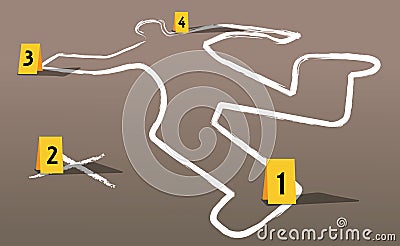
 Tanda-tanda
 Pengawasan TKP
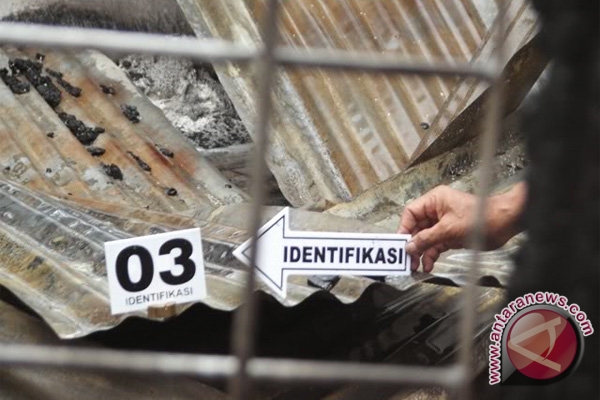
 Identifikasi
B. Penanganan Korban
 Ringan
 Berat
 Mati
C. Laporan Ke SatResKrim

Crime Scene Processing
1. Pencarian Tersangka/ Saksi/ Korban
Tersangka/ Saksi/ Korban apabila ditemukan, maka perlu diadakan identifikasi yang berguna untuk:
 Melakukan penyidikan lebih terarah
 Mencari hubungan tersangka dengan korban
 Mempermudah membuat daftar orang yang dicurigai
2. Pencarian Barang Bukti
3. Pemotretan
4. Sketsa
5. BAP

6. Pencarian Barang Bukti
1. Metode Spiral (Hutan, semak dll)


2. Metode Zone


3. Metode Strip


4. Metode Roda


7. Penanganan Barang Bukti
 Pelaku pada umumnya meninggalkan jejak/ bekas di TKP dan pada tubuh korban, karena setiap terjadi kontak fisik antara dua objek akan terjadi perpindahan materiil dari masing-masing objek
 Makin jarang dan tidak wajar suatu barang di TKP makin tinggi nilainya
 Barang yang umum akan menjadi tinggi nilainya apabila ada ciri khusus dari barang tersebut
 Selalu beranggapan bahwa barang yang mungkin tidak berarti bagi kita bisa menjadi barang yang penting bagi orang yang ahli
 Berupaya memperoleh bermacam-macam barang bukti dan mencari hubungannya
 Dalam penggeledahan badan harus teliti dan cermat dan selalu berprasangka.

Pengumpulan Barang Bukti
Pengambilan dan pengumpulan barang bukti harus dilakukan dengan cara yang benar disesuaikan dengan macam barang bukti yang diambil
1. Pada jalur masuk/ keluar pelaku
 Bekas ban kendaraan
 Bekas Kaki/ sepatu/ sandal
2. Pada tempat masuk/ keluar pelaku
 Sidik jari
 Bekas alat pembongkar
3. Di dalam TKP
 Sidik jari
 Barang-barang yang tertinggal
 Darah
4. Pada tubuh korban
 Darah
 Luka
 Bekas Perlawanan

8. Pengambilan dan Pembungkusan Barang Bukti
1. Pisau
menggunakan tali pada pangkal pisau. Dibungkus pada karton tebal
2. Senjata Api
menggunakan tali diikat pada bagian pemegang dan pangkal larasnya. Dibungkus dengan karton tebal
3. Anak Peluru
bungkus dengan kapas dan pisahkan antara satu peluru dengan peluru yang lain
4. Selongsong
Sama dengan anak peluru
5. Mesiu
tetesi dengan lilin/ parafin, kemudian setelah kering masukkan kedalam plastik dan label.
6. Darah
Basah berada ditempat lunak; pakaian. Gunting setengah tempat darah tersebut masukkan kedalam botol berisi cairan saline (larutan garam dapur NaCl 0.9 %)
7. Sperma
Basah, pindahkan ke botol kaca dan tutup rapat
Kering, biarkan pada tempatnya semula bungkus bersama tempatnya


8. Rambut
Ambil dengan pinset tempatkan pada kertas putih dan lipatlah sehingga posisi rambut ada ditengah, masukkan ke dalam kantong plastik dan label.
9. Barang dari gas
Harus dengan bantuan ahli dengan cara mengumpulkan gas yang ada ke dalam kantung plastik terbuat dari nylon dari beberapa tempat di TKP
10.Dokumen dan surat
Jangan sampai terjadi kerusakan pada saat pengambilan, jangan membuat coretan-coretan, simpan dalam amplop.

9. Pemotretan
SOP Pemotretan:
1. Visualisasi TKP
2. Objek: TKP/ korban mati
3. Waktu
4. Merk kamera+lensa dll
5. Sumber cahaya
6. Jarak kamera dengan objek
7. Nama dan pangkat juru potret

10.Faktor-faktor yang mempengaruhi Penanganan TKP
 Kemampuan diperoleh dari pendidikan formal
 Skill, diperoleh dari latihan dan mengikuti kinerja penyidik lain yang expert
 Dukungan peralatan
 Bantuan ahli yang memenuhi syarat
 Tambahan keterangan saksi/ korban

Hans Gross menyatakan keterangan saksi yang diberikan sering tidak menunjukkan data atau keterangan yang pasti

Kesalahan Umum Selama Pemeriksaan TKP
 Persiapan yang baik untuk persiapan
 Mengabaikan sebuah benda
 Mengejar pengakuan tersangka
 Menambah hal-hal yang sebenarnya tidak ada
 Mengganti/ memalsu
 Melompat-lompat atau tidak sistematis

Hal-hal yang diperhatikan Sebelum Meninggalkan TKP
 Cukup/ belum pemeriksaan
 Barang bukti sudah terkumpul/ belum
 Jumlah barang bukti
 Cara pembungkusan
 Konsep-konsep lengkap

11.Visum et Repertum
Surat yang dibuat oleh dokter dan memiliki kekuatan dengan bukti dalam pengadilan memuat hal yang dilihat, dialami dan diketahui berdasarkan ilmu pengetahuan dibidangnya terhadap barang-barang yang diperiksanya diatas sumpah (jabatan khusus)
(Ordonansi 1937 nomor 350 pasal 1)

Kasus-kasus yang memerlukan VeR
 Berhubungan dengan kematian
 Berhubungan dengan luka
 Berhubungan dengan seks/ kesusilaan
 Berhubungan dengan percobaan pembunuhan

Jenis-jenis VeR
A. Untuk orang hidup
1. Biasa
2. Sementara
3. Lanjutan
B. Untuk Orang Mati

Kesimpulan visum et repertum adalah pendapat seorang dokter yang bersifat subjektif sehingga hakim tidak terikat dalam membuat putusan. Kesimpulan berisi:
1. Jenis luka
2. Penyebab luka
3. Sebab kematian
4. Mayat
5. Luka
6. TKP
7. Penggalian jenazah
8. Barang bukti
9. Psikiatrik

Bentuk VeR
1. “Proyustisia”, Ordonansi materai tahun 1921 pasal 23 surat resmi untuk perkara pengadilan harus diatas kertas bermaterai atau bertuliskan “Proyustisia”
2. Judul Visum et Repertum
3. Pendahuluan
4. Pemberitaan/ hasil pemeriksaan, kenyataan (feiten) bersifat objektif
5. Kesimpulan, bersifat subjektif karena merupakan pendapat pembuat
6. Penutup, dibuat berdasarkan sumpah jabatan

Thursday, November 23, 2006

Senjata Api

HANDGUN
What is the modern handgun? Why is this piece of crafted metal and (recently) hard plastics still in great demand not only in military forces and police departments ALL around the world? The answers are: They are small, lightweight (well, most of them :-) and provide good firepower; suitable, not only for defensive situations, but for offensive ones, and even for medium game hunting. Of course, for each situation, careful choice of the proper handgun AND ammunition must be made. Handguns are divided into a few classes: semi-autos (or pistols), revolvers, and non-autos (single or multibarreled, single-shot or magazine fed). Semi-autos use part of the energy produced by burning cartridge powder to remove the used cartridge from the chamber, cock the hammer (or striker) and load a new cartridge in the chamber, so the pistol will be ready for the next shot. Cartridges are usually fed from a box magazine, located in the pistol's handle. Box magazines may contain up to 15 cartridges (or more) in single or double columns, depending on the pistol model, and are easy (and very quick) to reload.
All handguns are divided into one of two major groups depending upon the location of the chamber. Revolvers have a revolving chamber; pistols have a chamber integral with the barrel. There are various sub-types.
Some handguns are: single-shot pistols, revolvers, semi-automatic pistols, and fully automatic pistols. In the 15th century the term "pistol" was used for small knives and daggers which could be concealed in a person's clothing. By the 18th century the term came to be used exclusively to refer to hand-held firearms.
Both revolvers and semi-autos have two main "action styles": Single action and Double action. Single Action means, that the Revolver must be manually cocked (and, thus, the cylinder is rotated to the next cartridge) for each shot. This mode was the only one available in all old-time revolvers (such as the Peacekeeper), and is still available in most double-action revolvers. This mode improves accuracy but slows the fire rate. For Semi-autos, Single Action means that the pistol must be manually cocked for the first shot (usually, this is done by pulling the slide - this action cocks the hammer and feeds a cartridge into the chamber). For the second, and all consecutive shots, cocking is done automatically, when recoil force pulls back the slide. Double Action for the Revolver means that the hammer for each (including the f irst) shot is cocked by trigger pull (this action also rotates the cylinder to the next position). This mode speeds up the firing rate and simplifies shooting actions, but greatly increases trigger pull (from 2.2-4.4 lbs usually found in single-actions, to 8.8-12.2 lbs in double-actions). For the Semi-autos, the hammer is usually cocked by trigger pull for the first shot only; the second and the rest are done in single-action mode. However, first load must be fed in the chamber by the slide pull. Some (most of them - compact) semi-autos and revolvers employ Double-action-only mode, which cocks the trigger for each shot, thus excluding single-action. One of the biggest questions about handguns is: Why the Six-guns (a slang TERM for Revolvers) are stil alive when there's a big lot of the very reliable and larger capacity semi-auto handguns? The oldest answer is - reliability. Usually, given the same price (in low- or mid-range of prices), the revolvers were more reliable, primarily, because of the simplicity of the design. Today there's a lot of inexpensive semi-autos, that can hold twice or even triple as much loads ready to fire, than the common sixguns. But revolvers still alive. One of the main reasons to keep the revolver is that they're almost insencetive to ammunition. If your cartridge is capable of pushing a bullet thru the barrel of the sixgun - you got the working gun. No jams, no stoppages. Even in the case of the misfire you just got to pull the trigger again - and next round will go. In semi-auto, you need sufficient power to cycle the slide, thus rendering underpowered loads almost inoperable in semi-autos. Also, in case of the misfire, or jam, you should manually cycle the slide to fire the next round. In defensive scenario, this may cos you another second, and may be - your life. So, in general, sixguns are far less sensetive to ammo quality, and, due to simplicity and inherent design features, could withstand far more abuse. Also, when you go to the other, high-end of the loads (speaking in the terms of power), no semi-autos could withstand the power of loads such as .454casull or .475Linebaugh. Sixguns could.Main drawbacks of the sixguns are small ammo capacity, slower reloading and bulkier size. While 6 rounds may be sufficient for self-defence scenarios, it may be really insufficient for the police or SpecOps actions. Also, replacing the magazine in semi-auto ususlly is much faster process than reloading a revolvers' drum. And, due to significant cylinder diameter, even the 5-shot revolvers are harder to carry concealed, than the modern compact handguns, while the latter could hold tvice as much cartridges. Final selection of the guns is, undoubtfully, the owners' responcebility, but, in my opinion, revolvers are more suitable for civilians' self-defence and for hunting, while semi-autos are better combat and police guns.

The term "pistol" may be derived from the French pistole (or pistolet), which, in turn, comes from the Czech píšťala (flute or pipe, referring to the shape of a Hussite firearm). Other suggestions have been made—that it comes from city of Pistoia, Italy, where perhaps a manufacturer was one Camillio Vettelli in the 1540s; or that early pistols were carried by cavalry in holsters hung from the pommel (or pistallo in medieval French) of a horse's saddle.

Types of handgun
Varieties of handgun: "automatic" self-loading pistols, revolvers including black powder revolvers, multi-barreled pistols, single-shot hunting or target pistols and finally flintlock pistols. In a pistol, the chamber, in which the cartridge is held for firing, is the rearmost portion of the barrel. Thus the term "pistol" technically excludes revolvers, although this distinction is often ignored in colloquial usage, where revolvers are commonly referred to as "pistols."
Flintlock
The flintlock firing mechanism dates back to the 16th century, although it was another hundred years before it was generally used in infantry muskets, by which time it had been perfected. It survived well into the 19th century and was often known as the French lock because Marin le Bourgeoys, a French gunmaker working in Paris for Henry IV's Louvre, had invented it - in about 1610. He had modified a much more complicated mechanism into a simpler one-piece mechanism. It was also called a firelock. The basic action is that the trigger is pulled and a spring causes the striker, the frizzen, to strike the flint which showers sparks on to the gunpowder in the priming pan.
Multi-barreled
Multi-Barreled pistols such as some variants of Derringer and Pepper-box pistols are still in circulation today. The Pepper-box pistol is a multishot handheld firearm, which was popular in North America around the time of the American Civil War. The pepperbox was invented in the 1830s and was meant mainly for civilian use. It spread rapidly in the United Kingdom and some parts of continental Europe. It started disappearing gradually in the 1850s with the manufacture of true revolvers by Colt, Webley and others. It was similar to the revolver since like it, it held bullets in a rotating cylinder, in separate chambers. Unlike the revolver however, each bullet had its own barrel.
Revolvers
Image: China Police Revolver

Revolvers got their name from the rotating (or Revolving) cylinder, which contains cartridges. Usually the cylinder holds from 5 to 7 loads, although some .22 caliber revolvers may contain up to 8-10 cartridges. Loads in the cylinder may be reloaded in 2 ways (depending on revolver design) - one by one, as, for example, the Colt PeaceKeeper does (and almost all old-timers), or all simulateounosly - when the cylinder is switched to the side or when the is frame "broke open."
Revolvers feed ammunition via the rotation of a cartridge-filled cylinder, in which each cartridge is contained in its own ignition chamber, and is sequentially brought into alignment with the weapon's barrel by a mechanism linked to the weapon's trigger (double-action) or its hammer (single-action). These nominally cylindrical chambers, usually numbering between five and nine depending on the size of the revolver and the size the cartridge being fired, are bored through the cylinder so that their axes are parallel to the cylinder's axis of rotation; thus, as the cylinder rotates, the chambers revolve about the cylinder's axis. Due to simplicity of construction and operation, revolvers are considered to be more reliable than semi-automatic pistols.
Automatic pistols
Image: Colt 1911
Image: Berreta 92

Automatic pistols continue to fire so long as the trigger is held back. The term automatic pistol is commonly used to refer to an automatic or semi-automatic pistol.
Operating Mechanisms
Single-action (SA) handguns have a trigger mechanism whose sole function is to drop a pre-cocked hammer to discharge a cartridge. For revolvers the popular Colt Peacemaker of Old West fame is typically thought of. Its hammer must be manually cocked for each shot. For auto-loading pistols the Colt 1911 or Browning Hi-Power are typical examples. They must be cocked for the first shot, but subsequent shots are cocked automatically. These types of guns typically have a very light and crisp trigger pull, making for more accurate target shooting.
Traditional double-action (TDA) handguns have a mechanism that can be either pre-cocked, like the above single-action gun, or can be fired with the gun uncocked. In this case, the gun has an additional mechanism added to the trigger that will cock the gun (and rotate the cylinder in the case of revolvers) as the trigger is pulled. Once the trigger is pulled far enough, the hammer is released and the gun fired. For autoloading pistols the self-loading mechanism will also re-cock the hammer after the first shot is fired so that subsequent shots are fired single-action. For revolvers, each shot is fired with the hammer initially uncocked unless the shooter manually cocked the gun. Popular auto pistols in this category include the Walther P38 and Beretta Model 92. These guns typically have a longer, heavier trigger pull for the first shot then light, crisp pulls for subsequent shots. Popular revolvers include the Ruger Redhawk and Smith & Wesson Model 629. These have long, heavy trigger pulls for all shots unless the revolver is manually cocked.
Double-action only (DAO) handguns do not have the ability to be cocked and is usually evidenced by a lack of either the hammer spur or the entire hammer A typical autopistol in this category is the Ruger KP93DAO and Taurus Millennium, and a typical revolver is the Smith & Wesson Model 640 "Chief's Special". All pistols in this category have a long, heavy trigger pull for all shots.
Pre-set triggers are only on autoloading pistols. In this case the pistol mechanism is always partially cocked while being carried and during firing. The partially-cocked firing pin or striker is not cocked enough to cause an accidental release to discharge a cartridge, adding to the safeness of the design, but is cocked enough to remove much of the trigger pull and weight of a purely double-action pistol. These types of pistols do not have external hammers and do not generally have a decock function. Common pistols in the category are the Springfield Armory XD and the various forms of the extremely popular Glock. The trigger pull of these guns is between double-action and single-action pistols. Pre-set triggers may or may not have a second-strike feature on a dud cartridge.
Some automatic pistol models such as the HK Heckler & Koch USP (Universal Self-loading Pistol) come in a variety of mechanism types and can be easily changed by a gunsmith for both left- and right-handed shooters and for different operating mechanism and safety features.
Machine pistols
A machine pistol is generally defined as a firearm designed to be fired with one hand, and capable of fully automatic or selective fire. While there are a number of machine pistols such as the GLOCK 18 and later models of the Mauser C96, these are rare; the light weight, small size, and extremely rapid rates of fire of a machine pistol make them difficult to control, making the larger, heavier submachine gun a better choice in cases where the small size of a machine pistol is required. Most machine pistols have the ability to attach a shoulder stock (the Heckler & Koch VP70 would only fire single rounds unless the stock was attached) while others, such as the Beretta 93R, add a forward handgrip. Either of these additions technically create a legal non-pistol under the US National Firearms Act, as pistols are by definition designed to be fired with one hand. The addition of a stock or forward handgrip is considered a design change that creates either a short-barreled rifle or any other weapon, and therefore such additions are generally only found on legal machine guns.
Advantages of pistols
Pistols are smaller, lighter, easier to conceal, faster to bring to bear, and sometimes may have more safety features than other firearms.
Generally being an emergency self-defense weapon for use under 25 meters, a handgun bullet neither has the energy of, nor the accuracy of, a bullet shot from a rifle.


Ballistics


Ballistics (gr. ba'llein, "throw") is the science that deals with the motion, behavior, and effects of projectiles, especially bullets, gravity bombs, rockets, or the like; the science or art of designing and hurling projectiles so as to achieve a desired performance.
Overview
A ballistic body is a body which is free to move, behave, and be modified in appearance, contour, or texture by ambient conditions, substances, or forces, as by the pressure of gases in a gun, by rifling in a barrel, by gravity, by temperature, or by air particles.
Firearm ballistics information can also be used in forensic science. Separately from ballistics information, firearm and tool mark examinations involve analyzing firearm, ammunition, and tool mark evidence in order to establish whether a certain firearm or tool was used in the commission of a crime.
Ballistics is sometimes subdivided into:
• Internal ballistics, the study of the processes originally accelerating the projectile, for example the passage of a bullet through the barrel of a rifle;
• Transition ballistics, the study of the projectile's behavior when it leaves the barrel and the pressure behind the projectile is equalized.
• External ballistics, the study of the passage of the projectile through space or the air; and
• Terminal ballistics, the study of the interaction of a projectile with its target, whether that be flesh (for a hunting bullet), steel (for an anti-tank round), or even furnace slag (for an industrial slag disruptor).
A ballistic missile is a missile designed to operate primarily in accordance with the laws of ballistics.
The term ballistics is also sometimes used to refer to acceleration curves applied to the motion of a computer mouse.

Forensic Ballistics
A forensic ballistics experiment
In the field of forensic science, forensic ballistics is the science of analyzing firearm usage in crimes. It involves analysis of bullets and bullet impacts to determine the type and caliber of the firearm fired.
Rifling, which first made an appearance in the 15th century, is the process of making grooves in gun barrels that imparts a spin to the projectile for increased accuracy and range. Bullets fired from rifled weapons acquire a distinct signature of grooves, scratches, and indentations which are somewhat unique to the weapon used.
The first firearms evidence identification can be traced back to England in 1835 when the unique markings on a bullet taken from a victim were matched with a bullet mold belonging to the suspect. When confronted with the damning evidence, the suspect confessed to the crime.
The first court case involving firearms evidence took place in 1902 when a specific gun was proven to be the murder weapon. The expert in the case, Oliver Wendell Holmes, had read about firearm identification, and had a gunsmith test-fire the alleged murder weapon into a wad of cotton wool. A magnifying glass was used to match the bullet from the victim with the test bullet.
Calvin Goddard, physician and ex-army officer, acquired data from all known gun manufacturers in order to develop a comprehensive database. With his partner, Charles Waite, he catalogued the results of test-firings from every type of handgun made by 12 manufacturers. Waite also invented the comparison microscope. With it, two bullets could be laid adjacent to one another for comparative examination.
In 1925 Goddard wrote an article for the Army Ordnance titled "Forensic Ballistics" in which he described the use of the comparison microscope regarding firearms investigations. He is generally credited with the conception of the term "forensic ballistics", though he later admitted it to be an inadequate name for the science.
In 1929 the St. Valentine's Day Massacre led to the opening of the first independent scientific crime detection laboratory in the United States.

Fingerprint


A fingerprint is an impression of the friction ridges of all or any part of the finger. A friction ridge is a raised portion of the epidermis on the palmar or plantar skin, consisting of one or more connected ridge units of friction ridge skin. These ridges are sometimes known as "dermal ridges" or "dermal papillae".

Fingerprints may be deposited in natural secretions from the eccrine glands present in friction ridge skin (secretions consisting primarily of water) or they may be made by ink or other contaminants transferred from the peaks of friction skin ridges to a relatively smooth surface such as a fingerprint card. The term fingerprint normally refers to impressions transferred from the pad on the last joint of fingers and thumbs, though fingerprint cards also typically record portions of lower joint areas of the fingers (which are also used to effect identifications).


Fingerprint identification
Fingerprint identification (sometimes referred to as dactyloscopy is the process of comparing questioned and known friction skin ridge impressions (see Minutiae) from fingers, palms, and toes to determine if the impressions are from the same finger (or palm, toe, etc.). The flexibility of friction ridge skin means that no two finger or palm prints are ever exactly alike (never identical in every detail), even two impressions recorded immediately after each other. Fingerprint identification (also referred to as individualization) occurs when an expert (or an expert computer system operating under threshold scoring rules) determines that two friction ridge impressions originated from the same finger or palm (or toe, sole) to the exclusion of all others.


Latent prints
Although the word latent means hidden or invisible, in modern usage for forensic science the term latent prints means any chance or accidental impression left by friction ridge skin on a surface, regardless of whether it is visible or invisible[1] at the time of deposition. Electronic, chemical and physical processing techniques permit visualization of invisible latent print residue whether it is from natural secretions of the eccrine glands present on friction ridge skin (which produce palmar sweat, but no oils), or whether the impression is in a contaminate such as oil, blood, paint, ink, etc.


Patent prints
These are friction ridge impressions of unknown origin which are obvious to the human eye and are caused by a transfer of foreign material on the finger, onto a surface. Because they are already visible they need no enhancement, and are photographed instead of being lifted.

Plastic prints
A plastic print is a friction ridge impression from a finger or palm (or toe/foot) deposited in a material that retains the shape of the ridge detail. Commonly encountered examples are melted candle wax, putty removed from the perimeter of window panes and thick grease deposits on car parts. Such prints are already visible and need no enhancement, but investigators must not overlook the potential that invisible latent prints deposited by accomplices may also be on such surfaces. After photographically recording such prints, attempts should be made to visualize other non-plastic impressions deposited in natural finger/palm secretions (eccrine gland secretions) or contaminates.


Fingerprints collected at a crime scene, or on items of evidence from a crime, can be used in forensic science to identify suspects, victims and other persons who touched a surface. Fingerprint identification emerged as an important system within police agencies in the late 19th century, when it replaced anthropometric measurements as a more reliable method for identifying persons having a prior record, often under an alias name, in a criminal record repository.
Classifying fingerprints
Before computerization, manual fingerprint classification systems were developed to categorize fingerprints based on general ridge formations (such as the presence or absence of circular patterns in various fingers), thus permitting filing and retrieval of paper records in large collections based on friction ridge patterns independent of name, birth date and other biographic data that persons may misrepresent. The most popular ten print classification systems include the Roscher system, the Vucetich system, and the Henry system. Of these systems, the Roscher system was developed in Germany and implemented in both Germany and Japan, the Vucetich system was developed in Argentina and implemented throughout South America, and the Henry system was developed in India and implemented in most English-speaking countries.
In the Henry system of classification, there are three basic fingerprint patterns: Arch, Loop and Whorl. There are also more complex classification systems that further break down patterns to plain arches or tented arches.[5] Loops may be radial or ulnar, depending on the side of the hand the tail points towards. Whorls also have sub-group classifications including plain whorls, accidental whorls, double loop whorls, and central pocket loop whorls.
The science of fingerprint identification stands out among all other forensic sciences for many reasons, including the following: 1. Has served all governments worldwide during the past 100 years to provide accurate identification of criminals.


2. No two fingerprints have ever been found alike in many billions of human and automated computer comparisons.


3. Fingerprints are the very basis for criminal history foundation at every police agency.
Established the first forensic professional organization, the International Association for Identification (IAI), in 1915.
Established the first professional certification program for forensic scientists, the IAI's Certified Latent Print Examiner program (in 1977), issuing certification to those meeting stringent criteria and revoking certification for serious errors such as erroneous identifications.
Remains the most commonly used forensic evidence worldwide - in most jurisdictions fingerprint examination cases match or outnumber all other forensic examination casework combined.
Continues to expand as the premier method for identifying persons, with tens of thousands of persons added to fingerprint repositories daily in America alone - far outdistancing similar databases in growth.
Outperforms DNA and all other human identification systems to identify more murderers, rapists and other serious offenders (fingerprints solve ten times more unknown suspect cases than DNA in most jurisdictions).
Fingerprint identification was the first forensic discipline (in 1977) to formally institute a professional certification program for individual experts, including a procedure for decertifying those making errors. Other forensic disciplines later followed suit in establishing certification programs whereby certification could be revoked for error.
Fingerprint identification effects far more positive identifications of persons worldwide daily than any other human identification procedure. The American federal government alone effects positive identification of over 70,000 persons most days, including US-Visit (Department of Homeland Security) and Federal Bureau of Investigation fingerprint activities. A large percentage of the identifications (approximately 92% of US-Visit identifications) are effected in a lights-out (no human involved) computer identification process with 100% accuracy based on only two fingerprints.
As in any field of human endeavor, errors in fingerprint identifications can and do occur. Such errors in fingerprint identification are so rare that when they occur, they normally make headlines worldwide. One of the most famous fingerprint identification mistakes was made by the FBI Laboratory in 2004. Although the FBI Laboratory had previously made about one latent fingerprint identification error each eleven years, the 2004 error was the first instance in the 84 years of the FBI Laboratory's operation when an error was not discovered and corrected before it caused an innocent person to be jailed.


US fingerprint databases
The FBI manages a fingerprint identification system and database called IAFIS, which currently holds the fingerprints and criminal records of over fifty-one million criminal record subjects, and over 1.5 million civilian (non-criminal) fingerprint records. US-Visit currently holds a repository of over 50 million persons, primarily in the form of two-finger records by 2008, US-Visit is transforming to a system recording FBI-standard tenprint records).


Fingerprint compression
Most American law enforcement agencies use Wavelet Scalar Quantization (WSQ), a wavelet-based system for efficient storage of compressed fingerprint images at 500 pixels per inch (ppi). WSQ was developed by the FBI, the Los Alamos National Lab, and the National Institute for Standards and Technology (NIST). For fingerprints recorded at 1000 ppi spatial resolution, law enforcement (including the FBI) uses JPEG 2000 instead of WSQ.


Fingerprint locks
In the 2000s, electronic fingerprint readers have been introduced for security applications such as identification of computer users (log-in authentication). However, early devices have been discovered to be vulnerable to quite simple methods of deception, such as fake fingerprints cast in gels. Recently on episode on episode 59 of Discovery Channel show Mythbusters, the hosts were able to outsmart a fingerprint lock by imprinting molds on to ballistic gel and making copies of the fingerprints. To gain the fine clarity, they enlarged the finger print and then drew in the finger print lines with a permanent marker. Then they rescanned the fingerprint and shrunk it back to normal size. In 2006, fingerprint sensors gained popularity in the notebook PC market. Built-in sensors in ThinkPads, VAIO laptops, and others also double as motion detectors for document scrolling, like the scroll wheel.


References
Peer Reviewed Glossary of the Scientific Working Group on Friction Ridge Analysis, Study and Technology (SWGFAST)
Olsen, Robert D., Sr. (1972) “The Chemical Composition of Palmar Sweat” Fingerprint and Identification Magazine Vol 53(10)
Ashbaugh, David R. (1991) "Ridgeology". Journal of Forensic Identification Vol 41 (1) ISSN: 0895-l 73X
Johnson, P. Lee (1973) "Life of Latents" Identification News Vol 23(1)
Engert, Gerald J. (1964) "International Corner" Identification News Vol 14(1)
Henry, Edward R., Sir (1900) Classification and Uses of Finger Prints London: George Rutledge & Sons, Ltd.
Faulds, Henry, MD (1880) Nature
Reid, Donald L. (2003) "Dr. Henry Faulds - Beith Commemorative Society" Journal of Forensic Identification Vol53(2)
Galton, Francis, MD, Sir (1892) Finger Prints London: MacMillan and Co.
Chapman, Carey L. (1992) "Dr. Juan Vucetich - His Contribution to the Science of Fingerprints" Journal of Forensic Identification Vol42(4)
History of Fingerprints Scottich Criminal Records Office, retrieved Aug 2006
Myers, Harry J., II (1948) Fingerprint and Identification Magazine Vol30(2):
International Association for Identification History, retrieved Aug 2006
Bonebrake, George J. (1978) "Report on the Latent Print Certification Program" Identification News Vol28(3)

 
Design by Wordpress Theme | Bloggerized by Free Blogger Templates | coupon codes